
Yeshua, as our Passover sacrifice Lamb, fulfilled the symbolic significance of the Passover lamb in the
Old Testament and simultaneously accomplished freedom from the bondage of sin and the penalty, that being death eternal, including the Law of the Divorced Woman. To understand this, we need to explore the parallel between the Passover Lamb and Yeshua’s sacrificial death:
In the Old Testament, the Passover lamb was a central element of the Passover feast (Exodus 12:1-14). The Israelites were commanded to sacrifice a spotless lamb and smear its blood on the doorposts of their houses. The blood served as a sign, protecting them from the judgment of God when He passed over Egypt to strike down the firstborn of every household. The Passover Lamb represented deliverance from
physical bondage in Egypt and foreshadowed the ultimate deliverance from the bondage of sin
through Yeshua.
Meanwhile, in the New Testament, Yeshua is described as “the Lamb of God who takes away the sin of the world” (John 1:29). Just as the Passover Lamb’s blood protected the Israelites from God’s judgment, Yeshua’s sacrificial death on the cross provides redemption and atonement for humanity’s sin, setting them free from the consequences of sin. (not the Law, just the consequence)
The Law of the Divorced Woman is satisfied through the death and resurrection by eliminating the
problem of adultery. If the prior husbands are all dead, you are now a widow. As a widow you can be
cleansed from unrighteousness and according to scripture we can be made as white as snow.
- 2 Corinthians 11:2 “For I am jealous over you with godly jealousy: for I have espoused you to one husband, that I may present you as a chaste virgin to Christ.”
Yeshua’s sacrifice also established a new covenant between God and humanity (Hebrews 9:15). This
new covenant provides access to God’s grace and forgiveness based on faith in Yeshua’s finished
work on the cross. Under this ‘new covenant’, believers are set free from the condemnation of the
Law, not the law itself, and empowered to live by the Spirit.
Hebrews 11:1 Now faith (trust/firm persuasion) is the substance (assurance) of things hoped
for (expectantly awaited), the evidence (proof) of things not seen. (invisible)
Let’s paraphrase what Paul is saying here: “My faith, your faith, and our actions, and our enthusiasm
for Yeshua should be all the proof anyone needs, that the promises made to us from God, are still in
existence! We are the witnesses to this mystery.”
- Hebrews 11:6 But without faith (trust/firm persuasion) it is impossible to please him: for he that cometh to God must believe (completely convinced) that he is (real), and that he is a rewarder (one who gives payment of service) of them that diligently seek (this word combination has these combined meanings: crave, search out, investigate, demand and worship) him.
It will take a very deep-rooted conviction for the believer to sustain a way of life during the reign of
the Antichrist. This is why Paul is going to go through this intense litany of believers and their days of
strife in verses to follow.
- Hebrews 11:7-8 “By faith (trust/firm persuasion) Noah, being warned of God (divinely instructed) of things not seen as yet,(invisible) moved with fear (reverence), prepared an ark to the saving of his house (family, heritage); by the which he condemned (sentenced judgement) the world, and became heir (possessor) of the righteousness which is by faith. (trust/firm persuasion) By faith (trust/firm persuasion) Abraham, when he was called to go out into a place which he should after receiving for an inheritance, obeyed; and he went out, not knowing whither he went.”
The concept of life in the spirit after the death of the flesh was not a new concept to the Hebrew
people. In fact, there was much debate over the issue. The Essenes, The Pharisees, the Sadducees,
along with the Marcion, and Nicolaitans factions were always at odds with the concept of a
resurrection. It is this promise within the Everlasting Gospel that motivates the faithful to action and
obedience.
We, like Adam, are to establish a proper relationship between ourselves (the Bride) and our Bridegroom. We, like Noah, are to build a safe place for the faithful when their storm arrives. We, like Abraham, need to leave the comfortable and corrupt world we live within and search for the world God ordained in the
Garden. We, like Moses, once we have come face to face with YHVH, need to go back for our brothers and sisters who are captive to the 501c3 religious system and walk them through the desert.
The resurrection of Yeshua is a central event in Biblical eschatology and plays a crucial role in
defeating the second death as described in Revelation 20:14. To understand this connection, let’s
explore the concepts of the second death, the resurrection of Yeshua, and how it relates to the Feast
of Unleavened Bread.
In Revelation 20:14, the second death is mentioned in the context of the final judgment. It is
described as the eternal separation of those whose names are not found written in the Book of Life
from God’s presence. This is a spiritual death that goes beyond physical death and signifies eternal
condemnation and punishment in the lake of fire (Revelation 20:14-15).
The resurrection of Yeshua refers to His victory over death and His bodily rising from the dead on the
third day after His crucifixion. The New Testament records multiple appearances of the resurrected
Yeshua to His disciples and followers, confirming the reality of His victory over death. Yeshua’s
resurrection has profound implications for humanity. By conquering death through His resurrection,
Yeshua provides a way for believers to also overcome spiritual death or the second death. Through
faith in Him, believers receive the gift of eternal life and have their names written in the Book of Life
(John 3:16; Revelation 3:5).
The Apostle Paul writes, “For the wages of sin is death, but the free gift of God is eternal life in Christ
Jesus our Lord” (Romans 6:23). Thus, through Yeshua’s resurrection, believers are no longer subject
to the second death, but instead, they receive the gift of eternal life with God.
The Feast of Unleavened Bread is one of the biblical feasts prescribed in the Old Testament (Leviticus
23:6-8). It takes place immediately after the Passover and lasts for seven days. During this feast, the
Israelites were commanded to eat unleavened bread and remove all leaven (yeast) from their homes.
Leaven symbolized sin and corruption, and the unleavened bread represented purity and holiness.
The connection between Yeshua’s resurrection and the Feast of Unleavened Bread lies in the
symbolism of leaven. Just as leaven represented sin and corruption, Yeshua’s death and resurrection
signify the victory over sin and its power.
Paul draws a direct parallel between the symbolism of leaven and Yeshua’s resurrection in 1 Corinthians 5:7-8: “Cleanse out the old leaven that you may be a new lump, as you really are unleavened. For Christ, our Passover lamb, has been sacrificed. Let us therefore celebrate the festival, not with the old leaven, the leaven of malice and evil, but with the unleavened bread of sincerity and truth.”
Yeshua’s resurrection represents a new and purified life, free from the power of sin. Through faith in
Him, believers are made new and are delivered from the bondage of sin and its consequences,
including the second death. The Feast of Unleavened Bread, with its focus on purity and holiness,
serves as a symbolic reminder of the transformative power of Yeshua’s resurrection and the victory
over the second death that believers have in Him.
Our observance and obedience to the schedule of YHVH’s Feasts allows us to see the depth of The
Everlasting Gospel, its enormous power, and its presence in all the Feasts.
- Matthew 16:11-12 “How is it that ye do not understand that I spake it not to you concerning bread, that ye should beware of the leaven of the Pharisees and of the Sadducees? Then understood they how that he bade them not beware of the leaven of bread, but of the doctrine of the Pharisees and of the Sadducees.”
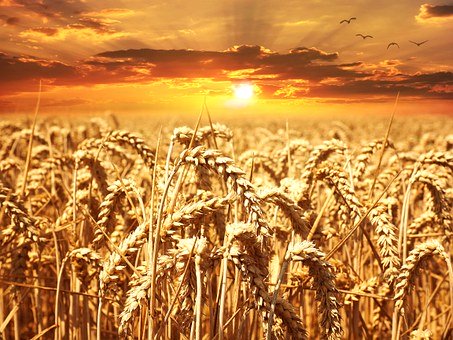
Next is Pentecost or the Harvest of the wheat and the burning of the tares. Matthew 13:30 “Let both
grow together until the harvest: and in the time of harvest I will say to the reapers, Gather ye
together first the tares, and bind them in bundles to burn them: but gather the wheat into my barn.”
The Feast of Weeks, also known as Shavuot or Pentecost, is a significant biblical feast. It is
mentioned in the Hebrew Bible (Old Testament) and holds profound spiritual significance. In the
context of the Everlasting Gospel, the Feast of Weeks is represented in its fulfillment through the
outpouring of the Holy Spirit and the birth of the Church on the Day of Pentecost in the New
Testament. This same concept is carried over into the life eternal.
When the Harvest is complete God will pour out the Holy Spirit on those being gathered as wheat. This feast is also know as the counting of the Omer. Let’s explore how the Feast of Weeks is represented in the Everlasting Gospel: In the Old Testament, the Feast of Weeks took place fifty days after the Passover, thus earning the name “Feast of Weeks” or “Shavuot,” as “41assove” means “weeks” in Hebrew. This feast had both agricultural and historical significance.
Agriculturally, it marked the wheat harvest and the offering of the firstfruits to God (Exodus 34:22). Historically, it commemorated the giving of the Torah to Moses on Mount Sinai, solidifying the covenant between God and Israel (Exodus 19-20).
The Feast of Weeks is powerfully represented in the New Testament on the Day of Pentecost, which
means “fifty” in Greek. This event occurred fifty days after Yeshua’s resurrection, following the
Passover, and became a momentous turning point in the history of the Faithful.
On the Day of Pentecost, the apostles and disciples were gathered in Jerusalem when suddenly, the
Holy Spirit descended upon them like a rushing wind and tongues of fire. This event represented the
fulfillment of Jesus’ promise to send the Holy Spirit (John 14:26; Acts 1:8). The Holy Spirit
empowered the believers, granting them boldness and enabling them to speak in various languages,
allowing people from different nations to hear the Gospel in their own tongues.
The outpouring of the Holy Spirit on the Day of Pentecost marked the birth of the “Church”. Peter,
filled with the Holy Spirit, preached a powerful sermon to the crowds, explaining the significance of
Jesus’ death and resurrection and calling people to repent and be baptized in the name of Jesus
Christ (Acts 2:14-41). About three thousand people responded and were added to the newly formed
community of believers, constituting the early “Church” (Acts 2:41).
The terminology here for the word church is G1577 ἐκκλησία ekklesia (ek-klee-siy’-a) n. a called out
assembly of the Redeemed of Jesus. This is not the brick and mortar evolution that has now afflicted
the faithful with thousands of differing doctrines or leaven.
Just as the Feast of Weeks in the Old Testament commemorated the giving of the Law at Mount
Sinai, the Day of Pentecost in the New Testament represents the giving of the Holy Spirit, which
fulfills the prophetic promise of a new covenant (Jeremiah 31:31-34). Through the Holy Spirit, God’s
law is now written on the hearts of believers, transforming them from within and enabling them to
live in obedience to God (Hebrews 8:10-12). We are waiting for the Harvest as related in Revelation.
 Berean Breadcrumbs
Leave a comment